
What’s the most underrated life skill?
Patience.
Which is terribly inconvenient, because I generally want everything done yesterday.
I want the answer. I want the finished project. I want to know what happens next. I want the thing I have been working toward to finally become the thing I can hold in my hands.
And yet, somehow, I have an almost ridiculous amount of patience.
Maybe some of it was trained into me long before I knew there was anything unusual about it.
My parents were strict. I also grew up in a time when children were expected to be considerably more self-sufficient than they often are today. I am part of Gen X. I had my share of the latchkey experience, and I was helping take care of my younger sister and brother by the time I was around nine.
And then there was my dad.
My father had an extraordinary ability to get consumed in whatever he was doing and completely lose track of time. Sometimes that meant I was sitting in the car waiting for him for hours. I think my longest wait was somewhere around four hours, although there may have been longer ones.
We didn’t have tiny computers in our pockets capable of filling every empty second.
Sometimes you were just bored.
So you figured it out.
I became very good at entertaining myself. I still am. I enjoy my own company. I can make myself laugh. I occasionally argue with myself, although for the record, I maintain a very healthy and active mind.
Mostly.
But somewhere in all of that waiting, I learned something I didn’t recognize as a skill until much later:
I learned how to exist when nothing was happening yet.
That is different from doing nothing.
Patience Isn’t Passivity
I think we sometimes imagine patience as sitting politely with our hands folded until life finally gets around to us.
That isn’t how I experience it.
Patience can require tremendous participation.
For years, I have practiced meditation at least twice a day. People tell me all the time, “I can’t meditate.”
And they’re right.
You cannot do it if you do not practice it.
Nobody sits down for the first time and magically becomes a master of their own mind. Mine certainly didn’t stop talking because I closed my eyes.
Your brain wanders.
You realize it wandered.
You acknowledge the thought.
You return.
Then it wanders again.
And you return again.
Over and over.
Eventually, something changes.
There are moments in meditation when I can observe the silence from within it. I am still there. My mind hasn’t disappeared. But everything becomes very quiet, and for a little while, I can simply experience that quiet.
Sometimes that is all there is.
Sometimes there are colors.
Sometimes there are images or visions.
But one of the lessons meditation has taught me is that you cannot go looking for those things.
Once you’ve experienced something extraordinary in meditation, there is naturally a part of you that hopes it will happen again. I learned that lesson myself. But if I sit down expecting the vision, waiting for the colors, hoping for some spectacular experience, I have already wandered away from the practice.
The vision isn’t the point.
The silence is.
And somewhere inside that silence, you begin to learn something else that becomes remarkably useful once your eyes are open again:
You are not your thoughts.
Your mind produces thoughts. All kinds of them. Mine never runs short.
A thought can arrive without being an instruction.
I could lie in bed at two in the morning and think a Little Debbie sounds fantastic. That does not mean the active, in-control Terra has to get out of bed and go buy one.
Thankfully.
I’m fifty. There are several reasons we don’t need to be doing that.
Besides, I live in a college town. If I really lose control of the situation, there are people who will bring candy to my house at practically any hour.
Sometimes I want the candy.
Sometimes that thought wins.
Sometimes it doesn’t.
But not every thought is about candy.
Some thoughts are uncomfortable. Some are angry or fearful. Some seem to arrive from nowhere. Some don’t reflect anything we believe, want or would ever choose to do.
Those thoughts aren’t automatically you, either.
Meditation taught me that I can notice what my mind has produced without immediately attaching myself to it.
There is the thought.
There is me observing the thought.
And then there is what I choose to do with it.
That space matters.
You don’t have to chase every thought simply because your mind produced it. You don’t have to respond to every impulse. You don’t have to solve every question the moment it appears.
You can acknowledge it.
And return.
That may be one of the greatest gifts meditation has given me, because eventually you discover that the practice doesn’t end when you open your eyes.
And maybe that is what patience actually is.
Not the absence of wanting.
Not the absence of thought.
Not even the absence of impatience.
The ability to experience all of those things without immediately surrendering your next action to them.
The ability to want something very much without forcing it before its time.
I Have Had Some Practice
In 2024, our country was in the middle of an extraordinarily contentious presidential election, and I was having conversations with people around me who saw what was happening very differently than I did.
Some supported Donald Trump. I did not.
What made those conversations difficult wasn’t merely disagreement. It was the feeling that everyone had locked themselves into position. We weren’t examining one another’s perspectives anymore. We were defending our own.
I listened. I really did.
I tried to understand the logic from the other side. I asked questions. I weighed what people told me against what I knew and what I was learning. I am not a political expert. I am simply a human being, old enough to vote, and I take that responsibility seriously.
And I felt strongly about that election—more strongly than I had ever felt about one before.
There was an additional complication.
I had once voted for Trump myself.
Shortly before the election, I wrote A Vote I’ll Always Regret: An Open Letter to Donald Trump. Three days later, I wrote A Future of Hope: Madam President in the Making about Kamala Harris.
I wasn’t trying to prove that I possessed some superior understanding. If anything, I was trying to demonstrate the opposite.
I had changed my mind before.
I was showing people how and why.
Still, those conversations often felt uphill. I believed with my whole heart that more people would eventually see what I believed I was seeing. There was no way, I thought, that Donald Trump would become president again.
Until he did.
That was a sad day for me.
I had invested so much time and energy trying to help other people see the light.
The problem was, of course, that I was showing them the light from my patch of soil.
Somewhere during that period, in meditation, SLIVER revealed itself to me.
Not an entire book. Not twenty-two chapters. Not an argument.
An idea.
A sliver.
Suddenly, I had language for something I had been struggling to understand.
Maybe we weren’t failing to see or hear one another simply because one side was talking and the other refused to listen.
Maybe we were standing in different places.
Two years later, I can read those two letters and see the version of myself who wrote them.
There are things she believed with tremendous certainty.
There are expectations she had that I no longer share.
And that’s okay.
Because one of the things patience teaches us is that today’s position does not have to become tomorrow’s prison.
Political moments feel permanent while we’re inside them.
They aren’t.
Presidencies end. Movements change. Systems strain, break, adapt and sometimes rebuild. People change their minds. History keeps moving whether we are ready for it or not.
My Little Grandma Rose used to say, “This too shall pass.”
So far, she has never been wrong.
And that has to apply beyond my own politics.
There have been people standing on very different patches of soil who have waited through presidencies I supported, elections they found devastating and political moments they were certain were taking the country in the wrong direction.
They waited, too.
That doesn’t mean we have to decide that every position is equally right or that evidence and consequences don’t matter. It means none of us gets to experience history from anywhere other than where we are standing.
Right now, politics is teaching me a kind of forced patience.
Our circumstances change.
Our certainties can, too.
A Sliver
What started as roughly twenty-two chapters has become eleven.
What once threatened to become a much larger book is now something a person can probably read in about forty-five minutes.
And I am incredibly proud of that.
SLIVER: The Light Between Us is not meant to tell you what to think.
It is about the limitations of what any of us can see.
We encounter this enormous reality from one tiny position within it—shaped by our experiences, relationships, culture, bodies, fears, losses, beliefs, identities, belonging and everything else that has happened along the way.
Our sliver.
What we see from there may be completely real.
It simply may not be everything there is to see.
I can only teach that idea from the place I understand it: my own patch of soil.
We all grow and bloom in different directions while reaching for the same sky.
Around that same period, I experienced another image during meditation.
I found myself lying in an enormous field of flowers, surrounded by thousands of straight stems and looking upward into a sea of purple petals.
I wasn’t looking for it.
That’s important.
It simply came.
At the time, I understood the vision primarily through presence, interconnectedness and the fleeting nature of life.
Today, standing somewhere different, I see something else in it too.
Every flower was growing from its own place.
And Today, I Gave SLIVER to Someone Else
Today, I commissioned the artwork for SLIVER.
That sentence makes me ridiculously happy.
I found an artist and designer in Pakistan through Fiverr. I’m not sharing her name just yet. When all is said and done, she will be credited properly for her work.
I chose her because of the way she engaged with the project.
I asked questions about original artwork, generative AI, licensing, source files and ownership. I wanted artwork created specifically for this book, without generative AI.
That matters to me for several reasons, including one that lives very close to home.
My son has a hardened position against AI-generated artwork. I happen to appreciate AI as a tool and use it thoughtfully in parts of my work. I also respect his position.
Honestly, the kid might never touch his mother’s book if I slapped an AI-generated cover on it.
And perhaps there is another tiny lesson from SLIVER hiding in that disagreement.
He is standing somewhere.
So am I.
Respect does not require either of us to pretend we are standing in the same place.
But the most exciting part of commissioning this artwork is that I have deliberately tried not to tell her what SLIVER is supposed to look like.
I have shared the book with her. I have explained what it means to me. I’ve shared some of my instincts, but I have also told her they are not boundaries.
I want to know what she sees.
Because how strange would it be to write an entire book about the limited position from which each of us encounters reality, hire someone to interpret it, and then insist that she stand exactly where I am standing?
I know my sliver of SLIVER.
I want to see hers.
I didn’t choose her because she lives on the other side of the world from me.
But now that I have chosen her, I love that she does.
There is something beautifully appropriate about handing this particular book to an artist standing thousands of miles from my own patch of soil and asking, in essence:
Where are you? What do you see from there?
And now comes the hard part.
I wait.
What’s Next?
Once the artwork is locked in, I will purchase my ISBNs.
Then there will be another thing.
And another.
Formatting. Final production decisions. Paperback. Ebook. Possibly an audiobook—which I am seriously considering narrating myself.
I want all of it done yesterday.
But wanting something quickly and rushing something are not the same thing.
It has taken me more than two years to get here.
There were months when I barely had time to give SLIVER anything at all. Life was happening. Work consumed enormous portions of my days. Then, rather unexpectedly, I got fired.
Suddenly, time changed shape again.
And still, I don’t want to hurry this book simply because I finally can.
It is that special to me.
Perhaps patience is not merely knowing how to wait.
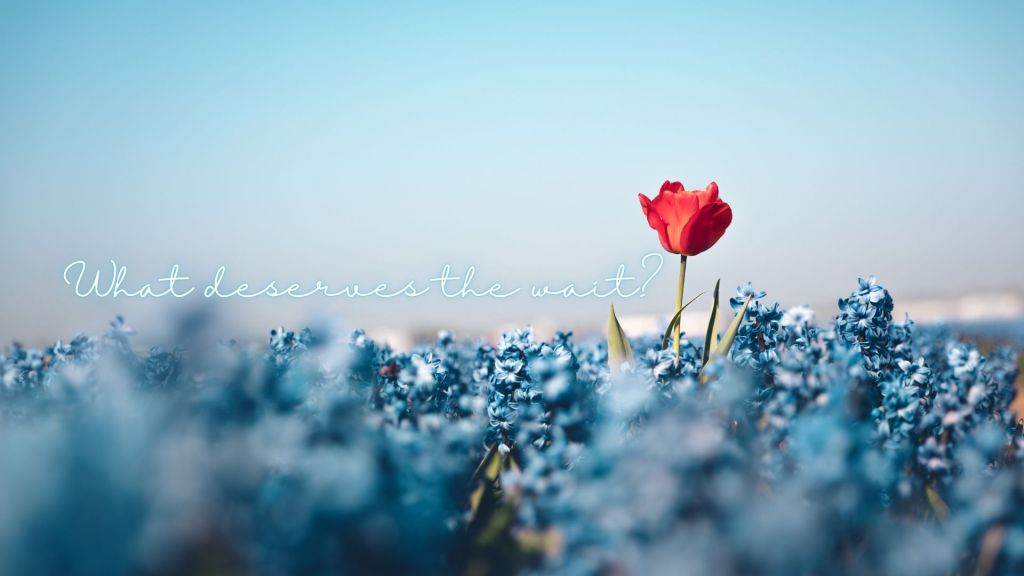
Perhaps it is knowing what deserves the wait.
Knowing when to keep working.
Knowing when to reconsider.
Knowing when to stop editing.
Knowing when to hand something to another person.
Knowing when your own perspective has occupied enough of the room.
I learned patience sitting in cars.
I strengthened it through years of meditation.
Life keeps testing it.
And today, somewhere in Pakistan, another human being has been invited to look at something I have carried for more than two years and show me what she sees.
I cannot wait.
Which, I suppose, is precisely the point.


YouTube Fab Five: Clifton Chilli Club
Read More >