
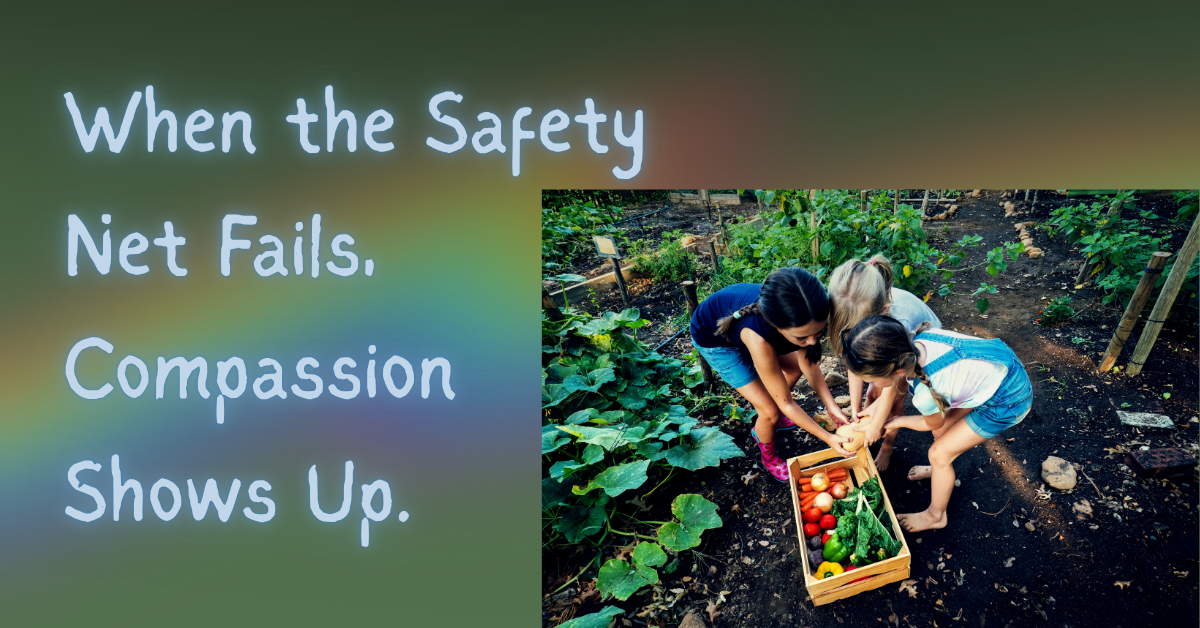

Inspired by Phil Lewis’s article, “As SNAP Benefits Come Under Threat, a Detroit Farmer Is Stepping Up to Help Fill the Void”
I read a story this week that stopped me in my tracks — about a Detroit farmer named Travis Peters, who owns Green Boots Veteran Community Horticulture Gardens and Marketplace.
With SNAP benefits under threat due to the ongoing government shutdown, he’s opening his gates to anyone who needs food. No questions asked. No judgment. Just care.
That simple act — offering a bag or two of produce to feed families — lit something in me. It reminded me that compassion doesn’t wait for permission. It just shows up.
Because right now, across this country, millions of Americans are wondering how they’ll put food on the table come November.
The USDA has warned that “the well has run dry,” and unless funds are released, more than 40 million people could lose access to the Supplemental Nutrition Assistance Program (SNAP) benefits they rely on.
This isn’t a story about “those people.”
It’s a story about us.
?? The Politics of Hunger
The immediate threat of the shutdown is compounded by long-term structural changes recently signed into law, which directly target the SNAP program.
Critics — including former Vice President Kamala Harris — have publicly condemned this dual crisis, arguing that the administration’s refusal to release contingency funds and the tightening of work requirements (which eliminate exemptions for veterans, the homeless, and narrow the exemption for parents of children aged 14 to 17) show an intent to dismantle the safety net.
Harris stated this amounts to “taking food away from our children.”
Regardless of where anyone stands politically, the reality remains: the lifeline millions depend on is being systematically weakened at a time when the cost of living is at its highest in decades.
? Understanding Food Insecurity
Food insecurity is a critical public health and economic issue. It’s a more precise term than “hunger,” because it looks at the why — the systemic causes behind why people struggle to get adequate food.
The USDA’s Two Tiers
The U.S. Department of Agriculture (USDA) defines food insecurity as a household-level economic and social condition of limited or uncertain access to adequate food.
It falls into two categories:
- Low Food Security: A reduction in dietary quality and variety.
- Very Low Food Security: The most severe level, where families resort to skipping meals or reducing portion sizes because they lack money for food.
Food insecurity is about resources and access, not just hunger. Hunger is the physical pain that can come from it.
Root Causes
Food insecurity is a systemic issue, not a personal failure.
It’s often driven by:
- Low or unstable income — wages that don’t keep up with rent and utilities.
- High cost of living — healthcare, housing, and transportation take priority.
- Systemic disparities and food deserts — single parents, Black and Hispanic households, and under-resourced neighborhoods face higher rates of food insecurity because of historic inequities and limited access to affordable, nutritious food.
Prevalence in the U.S.
About 1 in 7 households (13.5%) experience food insecurity each year.
Over 13 million children live in food-insecure homes.
Programs like SNAP and school meals aren’t luxuries — they’re lifelines that prevent those numbers from climbing even higher.
Health and Human Consequences
Food insecurity doesn’t just affect the stomach — it affects the whole person.
| Area of Impact | Consequences |
|---|---|
| Physical Health | Higher rates of chronic illness, obesity, and nutrient deficiencies. |
| Child Development | Slower brain development and learning delays. |
| Education | Lower test scores, more absences, less likelihood of graduation. |
| Mental Health | Higher anxiety, depression, and emotional strain. |
When we talk about cutting SNAP, this is what’s on the line — not politics, but people.
? Local Resources & How We Can Help Each Other
If you’re in the Springfield area, please know there is help available.
O’Reilly Center for Hope
While it isn’t a food bank itself, the O’Reilly Center for Hope can connect you with local food pantries and other community resources. They also provide assistance with housing, transportation, utilities, and more — truly a hub for those working to get back on their feet.
I worked there for a short time, and I can tell you firsthand — they care deeply about helping people move forward with dignity.
It’s not always easy to reach someone by phone, so it’s usually best to go in person or visit their website first to learn more about the services available. You can explore what they offer here:
? O’Reilly Center for Hope – Community Partnership of the Ozarks
And for those who can afford to do so, the Center also accepts donations — even directly through their website — so you can help right from home if you’d like. In addition to food and pet supplies, bus passes are incredibly useful donations that help people get to jobs, appointments, and interviews.
If you’re local and need help, please don’t hesitate to use these resources. There is no shame in getting the support you need for your health and wellness.
?? Building a Care Pack
As the weather cools and rain turns to snow, I’ve been thinking about putting together care packages to keep in my car — something I can give if I see someone in need.
It’s an idea I’ve carried for a while, and I plan to move forward with it soon.
I’ve started mapping out what those packages might include — small, practical items that can help someone in the moment and maybe even a few moments beyond:
- A bottle of water
- A protein bar or small snack
- A rain poncho
- A thermal blanket
- A small pack of wipes or sanitizer
- A bus pass (for mobility and independence)
- A kind note or word of encouragement
For me, this isn’t about grand gestures — it’s about meaningful ones. I talk more about this in The Kindness I Don’t Talk About, a reflection on why I tend to give quietly. Not because I’m secretive — but because I believe, as Matthew 6:3 teaches, that true kindness doesn’t need a spotlight.
I give quietly because I care deeply. And when I do give, I want it to count — not just for the day, but as a small reminder that help still exists, that hope still matters, and that sometimes, one small act can bridge someone’s hardest moment.
? When One Person Cares, It Ripples
Reading about Travis Peters reminded me why I can’t just sit still either. His efforts — opening his farm to feed families — are a powerful reminder of what happens when compassion leads.
My care packs may not look like his rows of produce, but the heart behind them is the same: to make sure someone else’s day gets a little lighter.
That’s what community really is.
It doesn’t wait for permission.
It doesn’t ask who’s “deserving.”
It simply shows up.
So if you have a heart to give, please do.
If you have a garden, share it.
If you have a pantry, donate from it.
If you have a little extra, make a care pack.
Because every single act — yours, mine, Travis’s, anyone’s — adds up to something this world desperately needs: human decency in action.
? Further Reading & Sources
If you’d like to explore more about food insecurity, SNAP benefits, and the policies shaping this issue, here are some trusted and nonpartisan resources:
- Phil Lewis – “As SNAP Benefits Come Under Threat, a Detroit Farmer Is Stepping Up to Help Fill the Void”
(The story that inspired this reflection.) - U.S. Department of Agriculture (USDA): Official Data on Food Security Rates
- Center on Budget and Policy Priorities (CBPP): Expert Analysis on SNAP Cuts & Policy Impact
- Congressional Budget Office (CBO): Non-Partisan Projections on Program Costs & Enrollment
- Planet Detroit: Detroit’s Urban Farming Movement
- Community Partnership of the Ozarks – O’Reilly Center for Hope
? Embrace Life. Pursue Wellness. Seek Truth.
— Terra Turner | CherryCoBiz




YouTube Fab Five: Clifton Chilli Club
Read More >