


The other day I watched a PBS Terra and Floodlight News report about Stargate, one of the largest AI data centers in the world, now under construction in rural Texas. The scale alone is hard to sit with: 4 million square feet of buildings across 1,100 acres, with dozens of diesel generators and gas turbines already on site and plans for many more. This is not the soft, weightless “cloud” we were sold. This is land, fuel, water, electricity, heat, exhaust.
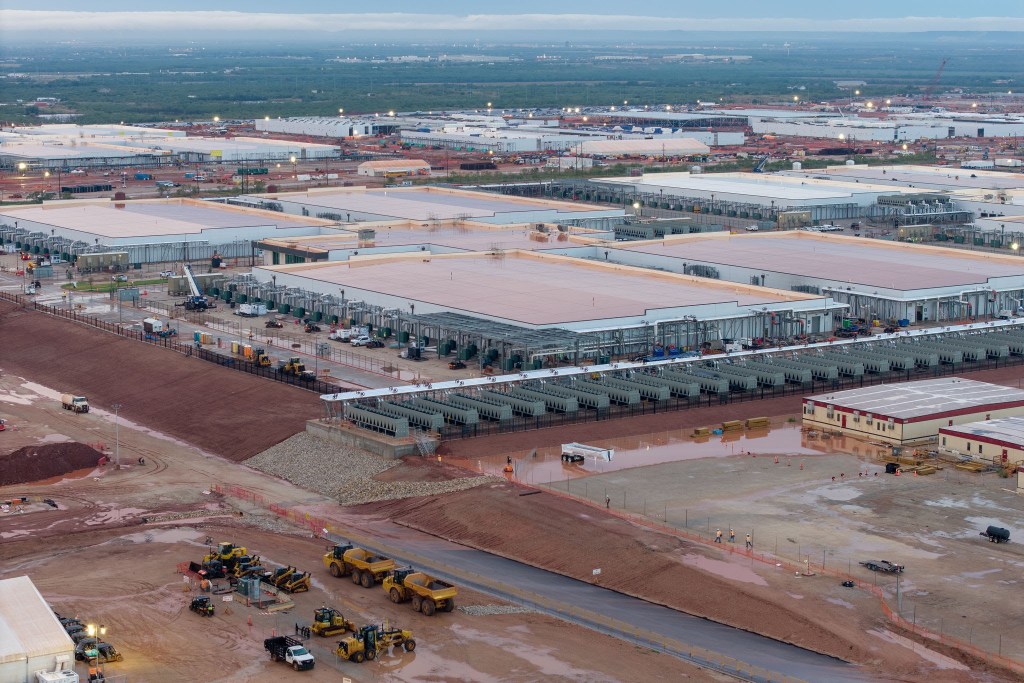
Photo: Kyle Grillot/Bloomberg via Getty Images.
At first, I thought I was watching a story about technology. But the longer I watched, the more it felt like a story about power, consent, and the cost of progress when ordinary people are left out of the conversation.
What stayed with me most was not the machinery. It was a woman standing in her yard, talking about her home, her health, her horizon, and the life she thought she was building. That is where the story changed for me. It stopped being abstract. It stopped being about whether AI is exciting or useful. It became about what happens when progress arrives before people have a real chance to understand, question, or consent to what is being built around them.
That is where the historical comparison begins to matter. During the Industrial Revolution and the Gilded Age, powerful people also promised progress. Railroads would connect the nation. Factories would create prosperity. Oil, coal, steel, and electricity would push society into a modern future. Some of those promises were real. Industry did reshape the world. It created wealth, movement, convenience, and possibility.
But it also produced dangerous working conditions, pollution, child labor, monopolies, exploitation, and communities forced to carry costs they did not create.
Progress arrived.
So did the bill.
Looking around today, I cannot shake the feeling that we are watching a modern version of the same story unfold. AI may be useful. It may help solve problems. It may change medicine, education, science, and everyday life in ways we cannot fully predict yet. I use AI. I see its potential. I am not interested in pretending the technology itself is the villain.
But I am very interested in asking who is building this future, who is profiting from it, who is regulating it, and who is being asked to absorb the consequences.
At some point, enough becomes a moral threshold. That does not mean people are wrong for wanting comfort, safety, beauty, or success. I want those things too. Most of us do. But after stability comes a question: what now? What do we owe each other when we have more than enough? What do powerful people owe the communities, workers, and natural systems that make their power possible?
That is where my frustration lives. Not with success. Not with wealth by itself. Not even with ambition. My frustration begins when wealth becomes insulation. When power becomes separation. When the people making decisions about everyone’s future appear less and less connected to the people who will live with those decisions.
We see it when billionaires buy platforms and reshape public discourse. We see it when executives announce layoffs while living in levels of luxury most people cannot even imagine. We see it when tech leaders talk about saving humanity while their companies consume enormous resources in the present. We see it when politicians weaken agencies meant to protect air, water, workers, and communities. We see it when public oversight is treated like an obstacle instead of a responsibility.

Photo: Bloomberg via Getty Images.
This is why Trump belongs in the conversation, but not as the whole conversation. He did not create every force we are dealing with. Wealth concentration, tech consolidation, deregulation, media manipulation, and environmental exploitation existed before him. But he has become a catalyst for many of those forces. He has shown, openly and repeatedly, what happens when political power becomes transactional, when loyalty matters more than competence, and when public institutions are treated as tools for personal and corporate advantage.
That becomes even more dangerous when powerful business figures understand how to use that vulnerability. Trump uses them, and they use him. The relationship is not clean or simple. It is a feedback loop. Political power wants money, amplification, loyalty, and spectacle. Corporate power wants access, favorable rules, weaker enforcement, and permission to move faster than democracy can respond. Somewhere in the middle of that exchange, ordinary people become background noise.
That is what makes this feel so much like history repeating itself. The industrialists of the past did not always present themselves as villains. Many believed they were builders, visionaries, and engines of progress. Some of them genuinely changed the world. But changing the world does not automatically make someone a steward of it. Building something powerful does not absolve anyone from the harm created along the way.
And this is where the planet itself has to enter the conversation. The Earth is not an unlimited resource waiting to be converted into profit. It is not a backdrop for someone else’s quarterly earnings report. It is not an inconvenience to be engineered around. It is home. Without clean air, water, soil, and livable communities, none of the promised future matters. There is no billionaire version of Earth. There is only Earth.
That is why apocalypse language frustrates me. People like Peter Thiel can dress power in theology and make oversight sound like tyranny. Tech leaders can warn about existential risk while building systems that concentrate control. Politicians can claim only they can save us from chaos while actively producing more of it. But apocalypse is a story. Oversight is a system. One asks us to fear the future. The other asks us to take responsibility for the present.
I do not believe we have to reject technology to ask better questions about it. I do not believe we have to hate success to criticize greed. I do not believe we have to abandon progress to demand accountability. In fact, I think accountability is what makes progress worth trusting.
The real question is not whether AI should exist. The real question is whether we are going to build the next industrial revolution with the same old disregard for the people and places asked to carry it.
History does not repeat perfectly, but it does rhyme when power goes unchecked. We have seen what happens when profit outruns conscience. We have seen what happens when government forgets its job is to protect people, not simply clear the runway for the already powerful.
So I keep thinking about that woman in her yard.
Not because she is the whole story, but because she is where the whole story becomes real. The future was being built beside her home before she had a meaningful chance to understand what it would cost. That is the part history keeps repeating. Progress arrives with promises, but ordinary people are left standing in the dust, asking why no one thought they deserved a say.
If the future is being built in our name, then we have a right to ask who it serves.
And if the answer keeps being “the people who already have more than enough,” then maybe the problem was never progress.
Maybe the problem was power without responsibility.
Further Watching
- PBS Terra / Floodlight News — We Saw What AI Data Centers Don’t Want You to See
- Joe Scott — Why Some Billionaires Are Actively Trying To Destroy The World



YouTube Fab Five: Clifton Chilli Club
Read More >