Video courtesy of the Cherokee Nation. I am sincerely grateful to the Cherokee Nation for inviting me to the premiere of Wherever We Are — Route 66. Thank you for the invitation, for sharing this story, and for continuing to preserve and celebrate Cherokee history. Watching the documentary stirred memories of my own family and ultimately inspired the reflections in this essay.
As a citizen of the Cherokee Nation, I expected to learn about the Mother Road and its significance to Cherokee communities. I certainly did. But what stayed with me long after the video ended wasn’t simply the history of Route 66.
It was the realization that stories travel much like roads do. They rarely begin where we think they begin.
Long before pavement and mile markers, people were already traveling these lands—trading, hunting, gathering, visiting family, and building communities. The roads we recognize today often followed paths that already carried generations of footsteps. Stories, I’ve come to realize, travel much the same way. Each generation inherits paths that someone else first walked.
As I watched, I found myself thinking about someone who has quietly appeared throughout my life and, if you’ve been reading here for a while, throughout my writing as well.
My Little Grandma Rose.
Her name was Rosemary Rose.
She wasn’t Cherokee. She married my Grandpa Rose, Alfred, and spent the earliest part of their marriage among his Cherokee family before life eventually carried them to Wheat Ridge, Colorado, where they would spend most of the rest of their lives together.
I don’t know every detail of those early months. I don’t know every conversation she had or every lesson she learned, and I don’t want to pretend that I do.
What I know is what came afterward.
Whatever she experienced during that season of her life left such a lasting impression that she never let her children—or her grandchildren—forget our Cherokee heritage.
She never claimed it as her own.
She honored it.
She loved Alfred, loved his family, and carried that respect with her for the rest of her life.
If you’ve spent much time here, you’ve probably heard me mention what my family simply calls the Holland House. I’ve written about the Holland House before in a very different context—as a place of meditation, memory, and the quiet ways the past continues to shape us. This time, though, I found myself remembering something much simpler.
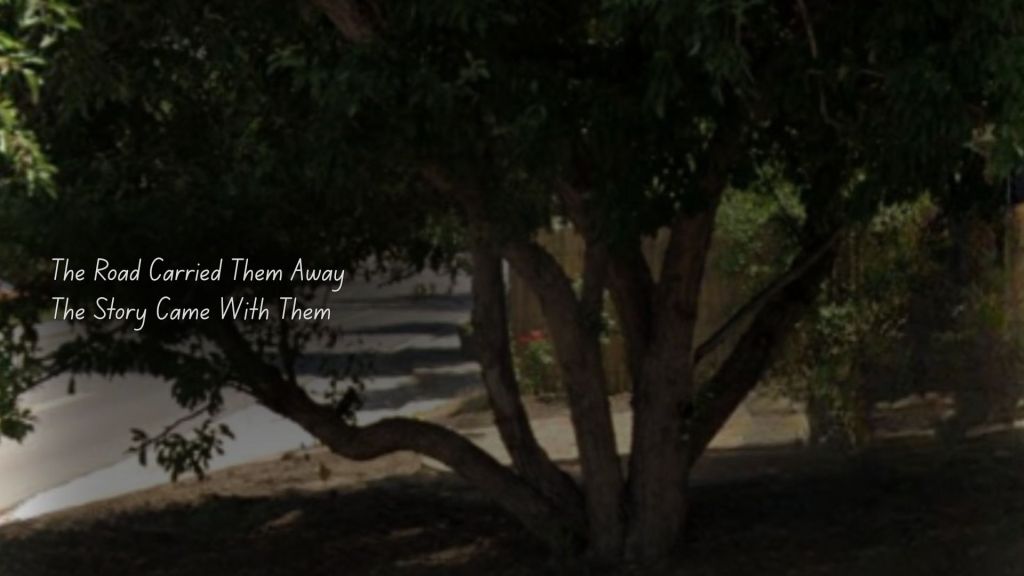
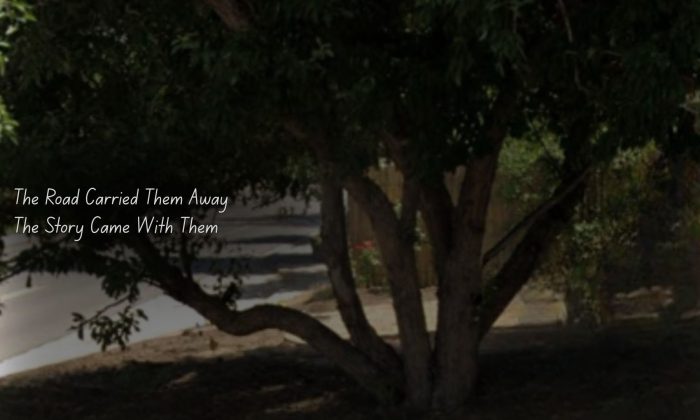
The tree at the Holland House. I hadn’t seen it in years until I found it again on Google Earth. The image has been intentionally cropped to preserve the home’s privacy.
Out front stood a little tree.
To my sister and me, it was the perfect climbing tree. Its branches seemed made for little girls with big imaginations. We climbed it whenever we thought we could get away with it.
Little Grandma Rose never stopped chasing us out of it.
She wasn’t trying to keep us from having fun.
She was worried we’d break the branches.
Of course, we couldn’t understand that. From our perspective, the tree was simply too perfect not to climb.
One afternoon she came after us again, threatening to spank our little bottoms if we didn’t stay out of that tree. We scattered in different directions. My sister dove under one of the beds, and Grandma followed after her.
The story she laughed about for years wasn’t that my sister hid.
It was what happened next.
A tiny hand slowly reached out from beneath the bed.
“Just smack my hand.”
Somehow, that little hand became funnier than the punishment ever could have been.
I hadn’t been back to the Holland House in years.
Recently, out of curiosity, I looked it up on Google Earth.
The tree is still there.
So is the very branch Little Grandma Rose was always afraid we’d break.
When I was a little girl, I thought she simply didn’t understand why we loved that tree so much.
Standing where I am now in life, I think I finally understand what she was trying to protect.
Little Grandma Rose wasn’t preserving Cherokee history for the world.
She was preserving it for her family.
Years later, I had the opportunity to return some of that love by helping care for her.
She had spent years caring for Grandpa.
She had spent years caring for us.
Being there for her never felt like repayment. Love doesn’t really work that way. It felt like the natural continuation of everything she had already poured into the people around her.
Watching the Cherokee Nation tell its own story also made me think of my mother.
Years ago, she devoted herself to researching and writing about one chapter of our family’s Cherokee history. I wrote more about that journey in a Mother’s Day reflection dedicated to her, where you’ll also find her research and the book that eventually grew from it, Zeke of Goingsnake.
Her research preserved names, places, and events that deserve to be remembered.
Little Grandma Rose preserved something different.
She made sure those stories mattered to the people who came after her.
One message from the documentary stayed with me.
Come visit.
Come experience.
Come hear our story.
There is something deeply hopeful about that invitation.
Not because the story is new.
Because it is still being told.
That invitation feels especially meaningful now that I once again call Springfield, Missouri, home. Historic Route 66 runs through the city where I live, and our community is preparing to celebrate the road’s centennial. Places like Queen’s Gate remind us that history isn’t tucked away somewhere behind glass. Sometimes we drive across it every day without realizing whose footsteps came before our own.
That’s what this documentary ultimately gave me.
Alfred and Rosemary Rose eventually left Oklahoma and built a life together in Colorado.
The road carried them away.
But the story came with them.
My mother carried part of it through research.
Little Grandma Rose carried it through memory.
Now, in my own small way, I’m carrying it through writing.
Perhaps that’s what we’re all doing, in one way or another.





1 thought on “The Stories We Carry Home”
Love it!!