


There is something almost insulting about watching anti-Sharia fearmongering get dragged back onto the stage in 2026 like it is still a serious constitutional concern and not the same tired panic campaign it has always been.
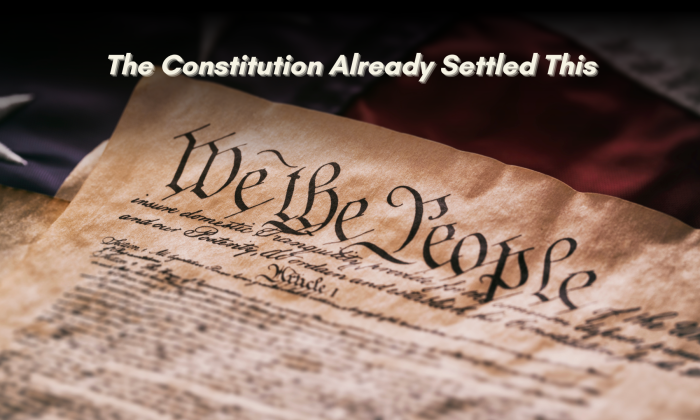
Because here is the thing: the Constitution already settled this.
That is what made Jamie Raskin’s response so effective. He did not need a dramatic performance. He did not need patriotic grandstanding or another round of chest-thumping theater. He simply pointed back to the document these people claim to revere whenever it is useful: the Constitution already prohibits theocratic rule. It already bars the government from establishing religion. It already forbids religious tests for public office.
In other words, no, America does not need a special panic button labeled Sharia.
It is already covered.
So what, exactly, are we doing here?
That question matters even more in 2026, because this is not happening in a vacuum. While lawmakers recycle anti-Muslim panic like it is still 2004, actual constitutional concerns are unfolding in real time. The Supreme Court’s immunity ruling is still reshaping what accountability can even look like for a president’s “official acts,” refugee restrictions are being pushed and defended in court, and federal immigration operations in Minnesota have already triggered injunctions, protests, and criminal investigations.
And yet here we are, watching people perform a rescue mission for a Constitution that is not under threat from the thing they are pretending to fight.
That is what makes this so absurd.
It is not just dumb. It is dangerous-dumb.
The kind of dumb that wastes public attention, fuels suspicion, and gives discrimination a legal-sounding costume. The kind of dumb that turns a stale moral panic into legislative pageantry while real threats go underexamined. The kind of dumb that keeps vulnerable people under suspicion while powerful actors get a free pass.
Chip Roy’s framing was familiar for a reason. We have heard this routine before. There is always some ominous warning about outsiders. Some breathless claim that America is about to be overtaken by a foreign threat. Some theatrical insistence that the republic is on the brink unless the right people are feared quickly and loudly enough.
It is a 2004 script being performed by 2026 actors who apparently forgot the audience has already seen the ending.
And the ending is always the same: Muslim communities get vilified, fear gets normalized, and the Constitution gets used as a prop by people who seem to read it only when it can be weaponized against someone else.
What Raskin did so effectively was strip the drama out of the spectacle and expose how unnecessary the whole exercise was. The Establishment Clause already bars the government from imposing sectarian law. The Free Exercise Clause protects people’s right to practice their religion without giving them power to replace public law with private doctrine. Article VI already forbids religious tests for office.
Closed case.
So unless Congress has recently discovered a secret constitutional loophole called “panic first, read later,” this was never about solving a real legal problem.
It was about manufacturing one.
And that is where the hypocrisy becomes impossible to ignore.
Because the same people who suddenly become constitutional purists when Islam enters the conversation often seem remarkably relaxed when the religious overreach is homegrown, politically useful, and wrapped in Christian branding.
Curious.
If the concern were truly about protecting secular governance, then the outrage would be consistent. It would show up whenever anyone tried to erode the separation of church and state. It would show up whenever sectarian ideology tried to muscle its way into public institutions. It would show up whenever politicians started behaving as though one religion owns the nation more than another.
But that kind of consistency would require principle.
This is not principle.
This is selective panic.
And let us go one step further: if you are implying that Muslims, by virtue of being Muslim, are inherently suspect participants in public life, then you are not defending the Constitution from foreign influence. You are violating one of its most basic commitments yourself.
That is the part that deserves more attention.
Article VI does not stutter. No religious test shall ever be required as a qualification for any office or public trust under the United States.
Ever.
So if your politics require treating one faith as uniquely disqualifying, uniquely suspect, or uniquely incompatible with American public life, then the constitutional problem is no longer hypothetical.
The call is coming from inside the house.
You do not get to wave the Constitution around like a security blanket while quietly gutting one of its clearest protections.
That is not constitutional fidelity.
That is prejudice with a flag pin.
And let us be honest about the broader irony here. While they are hunting for “creeping Sharia,” there are far more immediate threats to constitutional rights and democratic norms happening in plain sight. While they are performing concern over a hypothetical religious takeover, there are real questions about executive overreach, real questions about civil liberties, real questions about immigration enforcement, and real questions about the conduct of state power. Reuters has reported that a federal appeals court allowed Trump to continue an indefinite refugee-admissions suspension, while Minneapolis-area immigration operations sparked court intervention and investigations after deadly shootings of U.S. citizens and broader public outrage.
But apparently we are supposed to believe the emergency is Muslims owning property and existing in public.
Sure.
Because nothing says “serious governance” like reviving anti-Muslim panic while more direct constitutional tensions are staring the country in the face.
This is why the hearing was not impressive. It was revealing.
It revealed that too many on the right are not interested in neutral constitutional protection. They are interested in deciding which religions get treated as legitimate and which get treated as dangerous. Which public expressions of faith are considered patriotic and which are treated as infiltration. Which believers count as “real Americans” and which are expected to live under permanent suspicion.
That is not constitutional stewardship.
That is hierarchy.
And if your “religious liberty” only seems urgent when it protects your own worldview, then what you are defending is not liberty at all. It is dominance with better branding.
That is why Raskin’s remarks landed so well. He did not merely rebut the argument. He reminded the room that the founders already built protections against sectarian rule into the structure of American government. We do not need a special anti-Sharia panic package to preserve that structure.
We need lawmakers who know the difference between governance and scapegoating.
We need people willing to admit that this was not a constitutional emergency. It was political theater. Fear in a necktie. A familiar script rolled back out because it still works on an audience trained to confuse difference with danger.
And that may be politically useful for some, but let us not confuse usefulness with truth.
The 2026 Reality Check
The hearing’s focus: a hypothetical threat of religious law that has already been unconstitutional for generations.
The actual horizon: broad presidential immunity for official acts, aggressive refugee restrictions being defended in federal court, and immigration operations in Minnesota that have already produced injunctions, protests, and investigations.
One of these is a ghost story. The others are on the evening news.
The Constitution already settled this.
What this hearing really settled is something else: too many of the people shouting loudest about “protecting America” are still relying on the same old machinery of fear, only now with less subtlety and even less shame.
That should concern all of us far more than the ghost story they are trying to sell.
Further Reading
If this pattern feels familiar, I have written before about the misuse of religion, the distortion of constitutional language, and the performance of political extremism in modern American life:
We the People Still Have Power: What the Constitution Tells Us When Tyranny Creeps In
Shattering Illusions: Exposing the Myths of Christian Nationalism and Political Extremism
Armageddon in the Briefing Room: A Reverb Reflection on Faith, Force, and the Psychology of Sacred Power
Exposing the Trump Bible Grift and the Dangerous Intersection of Faith and Politics



YouTube Fab Five: Clifton Chilli Club
Read More >