
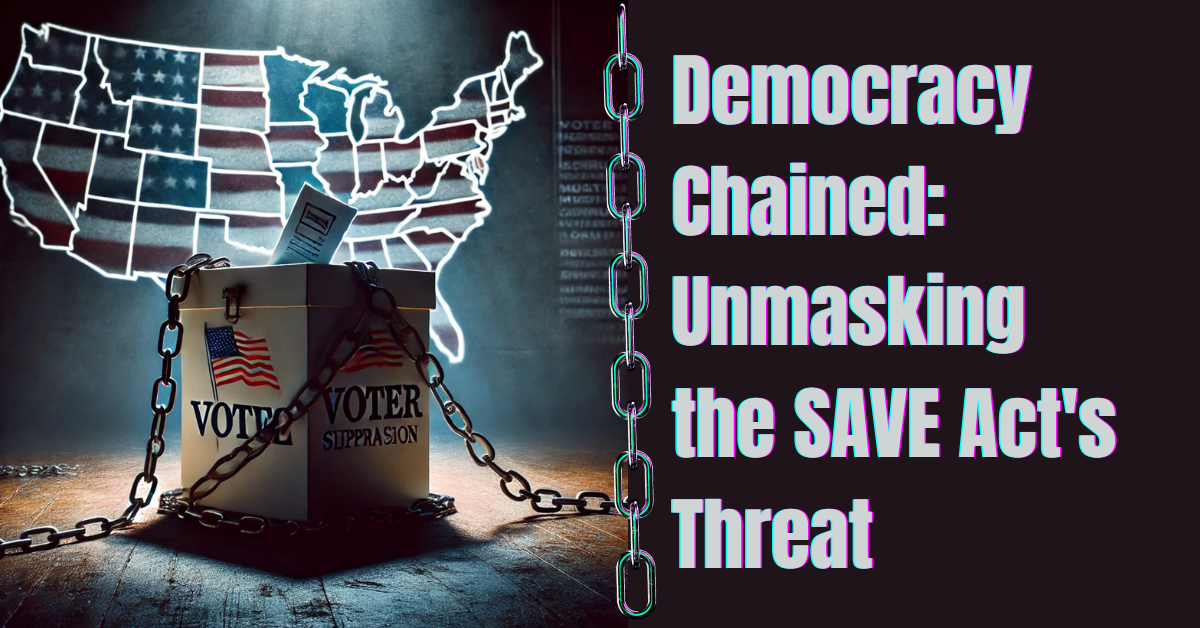

Voter Suppression Reverb
The fight against voter suppression is not over—it’s accelerating. The SAVE Act, recently reintroduced in Congress, is the latest attempt to disenfranchise millions of Americans under the guise of “election integrity.” But let’s be clear: this bill is not about protecting elections; it’s about making it harder for certain groups—particularly women, low-income Americans, and people of color—to vote.
The video “MAGA Plan To BLOCK MILLIONS Of Women From Voting Just Got Outed” by Rebel HQ, presented by Miranda Scholl, exposes just how dangerous this bill is. If passed, the SAVE Act would require voters to register in person and provide either a passport or birth certificate—documents many citizens either don’t have or don’t carry easy access to. Who does this affect the most? The 69 million American women who have changed their last name due to marriage or other life events, low-income individuals who struggle to obtain these documents, elderly and disabled voters who cannot easily register in person, and countless others.
And here’s the kicker: this bill was drafted with help from The Heritage Foundation, the same far-right think tank behind Project 2025—a blueprint for authoritarian rule. These are the same people who helped attempt to overturn the 2020 election, and now they want to gut voting rights in a way that doesn’t explicitly repeal the 19th Amendment but achieves a similar outcome. This is Jim Crow tactics rebranded for a new era. Historically, voter suppression has evolved, but the goal has remained the same: maintain control by making voting as difficult as possible for the people least likely to support right-wing policies. From literacy tests and poll taxes targeting Black voters in the post-Civil War South to modern-day ID laws, the playbook hasn’t changed—just the methods.
Legal Challenges & State-Level Suppression
The SAVE Act, if passed, is likely to face legal challenges, particularly under the Voting Rights Act of 1965 and the 14th Amendment, which protects equal access to voting. However, the conservative shift in the courts could impact the rulings on these cases, making it critical to remain vigilant.
Beyond federal efforts, voter suppression is happening at the state level as well. Many states have enacted restrictive voting laws in recent years—Texas, Georgia, and Arizona have all introduced or passed legislation that disproportionately affects marginalized voters. This bill follows the same playbook.
The Role of the Courts & Local Election Officials
The judiciary plays a crucial role in protecting voting rights, but with the Supreme Court’s 2013 decision in Shelby County v. Holder, key protections from the Voting Rights Act were gutted, allowing states to implement restrictive laws without federal oversight. This ruling directly paved the way for laws like the SAVE Act.
At the local level, election officials are also burdened by these new restrictions. Many of these officials are already under immense pressure, with threats of violence and political interference increasing since 2020. Restrictive laws place additional hurdles on them, making it harder to facilitate fair elections.
The Numbers Don’t Lie
In Georgia, strict voter ID laws have led to the rejection of thousands of ballots, disproportionately affecting Black and low-income voters. A 2017 study by the Government Accountability Office found that voter ID laws reduced turnout by 2-3 percentage points, which may not sound like much—until you realize that translates to hundreds of thousands of votes lost in key states. This isn’t about security; it’s about silencing opposition.
Let’s not forget the bigger picture. Voter suppression laws and election manipulation likely played a significant role in Trump’s return to power. He and his allies didn’t even try to hide it. The far-right has been systematically chipping away at voting rights for years, knowing that when fewer people vote, they win. They claim the SAVE Act is about “election security,” but let’s be real—it’s already illegal for non-citizens to vote in federal elections. This bill doesn’t stop illegal voting; it creates new barriers for legal voters.
And let’s not ignore Elon Musk’s role in shaping the narrative online. By amplifying disinformation, manipulating algorithms, and reinstating far-right figures on his platform, he has helped normalize voter fraud conspiracies and distort reality. Social media, once a tool for grassroots activism, has become a megaphone for authoritarian propaganda. Musk’s control over digital discourse isn’t just about “free speech”; it’s about controlling what conversations dominate the public sphere—and suppressing those that challenge his ideological allies.
The Intersection of Suppression: Who is Most Affected?
Voter suppression doesn’t impact everyone equally—it disproportionately affects women, people of color, low-income Americans, the elderly, and disabled individuals. These groups often face multiple barriers at once, such as lack of access to documents, polling place closures, or reduced early voting options.
What can we do? Resist with everything we’ve got. Spread awareness. Call your representatives. Make noise. If you have family members who might be impacted by laws like this, make sure they understand what’s at stake and help them navigate the system. Voter suppression thrives on confusion and apathy, so staying informed is one of our best weapons.
This is not a drill. The SAVE Act has already passed the House once, and it has been reintroduced. We can’t afford to sit back and assume it won’t gain traction. Make your voice heard. Because if they succeed in restricting voting rights this time, what’s stopping them from coming for even more?
Democracy dies in silence. We don’t have that luxury.
Check this out…



1 thought on “Eroding the Right to Vote: Unpacking the SAVE Act’s Real Impact”
Pingback: We the People Still Have Power: What the Constitution Tells Us When Tyranny Creeps In – CherryCoBiz