


Source: Occupy Democrats and The David Reddish Show
The video circulating right now — “Trump’s ICE Just Met Their Match As The Black Panthers Return” — is provocative by design. Armed figures. Raised voices. A warning directed at a federal agency many Americans no longer trust.
It’s easy to react emotionally.
It’s harder — and far more important — to ask why this content is resonating right now.
Because moments like this don’t appear out of nowhere.
They appear when people feel unprotected.
Why Groups Like This Re-Emerge
The Black Panther Party did not emerge in the 1960s because communities wanted conflict. It emerged because police violence was routine, accountability was absent, and the state had lost legitimacy in the eyes of the people it claimed to serve.
History often freezes the Panthers in imagery — guns, berets, leather jackets — while stripping away context.
The fuller truth is less sensational and far more instructive.
The Panthers built free breakfast programs, medical clinics, legal aid services, and education initiatives. They launched the first nationwide screening program for sickle-cell anemia. They helped bring community-based healthcare models — including acupuncture protocols still in use today — into the American mainstream.
The guns were never the point.
The breakdown of trust was.
That history is rarely taught — and often intentionally obscured.
AJ+
As documented by AJ+, the Panthers spent far more time serving their communities than confronting police. That part of their history was deliberately buried — in no small part due to COINTELPRO, a federal counterintelligence program designed to fracture movements, discredit leaders, and control public narrative.
When people remember only the threat and not the care, they misunderstand both the past and the present.
Fast Forward to Now
ICE operations have escalated. Protest footage shows agents shoving civilians, deploying force, and operating with a confidence that feels less like public service and more like unchecked authority.
In Minnesota and beyond, families are watching videos that don’t align with official statements. Communities are asking questions — and not receiving answers.
Against that backdrop, the reappearance of Panther imagery isn’t surprising.
It’s not a strategy.
It’s a signal.
The Contrast That Matters
While Secretary Kristi Noem delivers polished soundbites and carefully staged imagery — a kind of political cosplay meant to project strength — the people appearing in these videos are not performing.
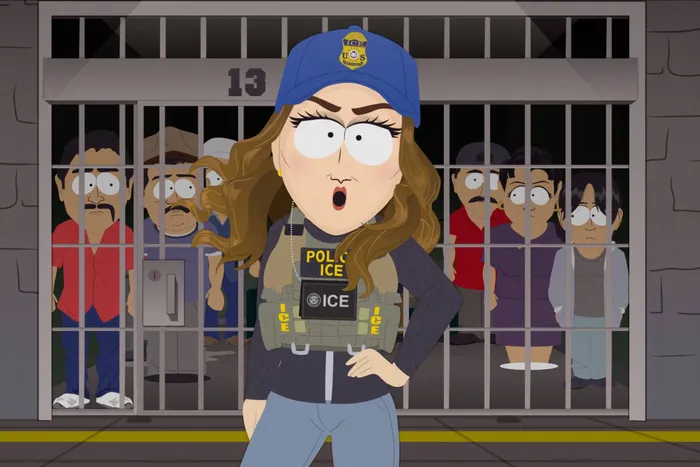
Image source: Vulture / New York Magazine
They are reacting to what they believe is a real and immediate threat.
You don’t have to agree with their tactics to understand the psychology at work.
Notably, the modern Philadelphia chapter — led by Paul Birdsong — has explicitly described itself as internationalist, framing its stance as solidarity with immigrant communities and others facing state overreach, not as a racial or separatist movement.
That distinction matters.
When trust collapses, escalation fills the vacuum.
The Cracks Are Being Investigated
This sense that the system itself may be compromised isn’t just emotional intuition — it is now the subject of formal congressional scrutiny.
In a letter dated January 12, 2026, Jamie Raskin demanded records from the Department of Homeland Security and the Department of Justice regarding masked federal agents and potential extremist infiltration.
He asked plainly:
“Who is hiding behind these masks? How many of them were among the violent rioters who attacked the Capitol on January 6 and were convicted of their offenses? The American people deserve to know how many of these violent insurrectionists have been given guns and badges by this Administration.”
Documents are due January 26.
This is not speculation.
It is oversight.
The Uncomfortable Question
The Constitution currently provides three formal mechanisms to remove a president: impeachment, resignation, and the 25th Amendment. All three assume something crucial — good-faith participation by those in power. They assume institutions act when democratic norms are violated.
History — including our own — shows that systems can be captured. Laws can be bent. Oversight can stall.
And when that happens, people don’t suddenly become radicals.
They become afraid.
A Warning Light, Not a Blueprint
What the Black Panthers represent in this moment is not a plan to follow.
It is a warning light.
That light isn’t new. In 1966, the Panthers published their Ten-Point Program not as a threat, but as a diagnosis of a legitimacy crisis. The founders described it as a combination of a Bill of Rights and a Declaration of Independence — a demand for basic protections the system was failing to provide.
Reading it today, the parallels are difficult to ignore. When we place the “What We Want” of 1966 alongside the realities of 2026, the diagnosis remains strikingly similar.
The Demand for Physical Safety
1966 Diagnosis:
An immediate end to police brutality and the murder of Black people.
2026 Reality:
Civilian deaths during federal operations and the expanding use of masked agents operating with force that has left communities in a sustained climate of fear.
The Demand for Institutional Integrity
1966 Diagnosis:
The right to a trial by a jury of peers from the community, ensuring the law remains impartial.
2026 Reality:
High-level DOJ resignations following stalled civil-rights investigations, raising serious questions about whether legal guardrails are still functioning as intended.
The Demand for Community Stability
1966 Diagnosis:
A call for land, bread, housing, education, justice, and peace.
2026 Reality:
Large-scale “Metro Surge” deployments described by local leaders as invasive and destabilizing — interventions that often disrupt the very peace they claim to protect.
A Quick Fact-Check for 2026
To understand why local leaders describe these operations as destabilizing, it helps to look at scale. The roughly 2,400 federal agents currently deployed in cities like Minneapolis and St. Louis represent nearly double the size of local police forces in those areas — an imbalance that fundamentally alters community dynamics and heightens fear rather than restoring trust.
The Panthers understood something we are relearning now: when the law no longer feels impartial, people stop believing it will protect them.
This comparison is not an endorsement of tactics, nor a call to recreate the past. It is an examination of what happens when legitimacy collapses and fear fills the space where trust once lived.
The re-emergence of this imagery isn’t an attempt to restart 1966.
It is a signal that the same cracks in our foundation have reopened.
The Psychology of Escalation
Through the lens of Carl Jung, the Panther functions as a shadow archetype — a symbol that emerges when suppressed fears and unmet needs are no longer containable within formal systems.
When the formal system — the King, the Institution, the Law — becomes rigid, unresponsive, or threatening, the shadow emerges to express what the system refuses to confront.
The shadow is not inherently virtuous.
But it is always informative.
It tells us where fear, repression, and unmet needs have accumulated.
Ignoring the shadow doesn’t make it disappear.
It makes it louder.
Missouri: “It’s Not Happening Here” Is a Dangerous Myth
A common response to unrest elsewhere is reassurance: “They’re not coming here.”
Missouri proves why that belief is false — and why no state is insulated.
In 2025, the Missouri legislature passed House Bill 1, a rare mid-decade redistricting designed to secure an additional congressional seat. The bill dismantled Kansas City’s historic district, splitting it into three sprawling rural-leaning districts.
Citizens responded constitutionally.
A grassroots group, People Not Politicians, gathered over 305,000 signatures — nearly triple the required number — to veto the map.
The response?
The Secretary of State invalidated roughly one-third of the signatures, citing administrative technicalities. Organizers are now in court, pointing to Missouri Supreme Court precedent affirming citizens’ right to collect signatures once a bill is signed.
An ethics report released January 15, 2026, revealed that a GOP-backed PAC spent $2.9 million to stop the signature drive — including targeted, intimidating text messages to voters.
This is what system capture looks like.
When people can’t trust the maps, they turn to referendums.
When they can’t trust the referendums, they turn to courts.
When all of it feels blocked, escalation fills the vacuum.
The “Fourth Option” Conversation
Talking about a hypothetical “fourth option” is not a call to action or violence. It is a design question.
Our military swears an oath to the Constitution, not to a person. That oath exists because history teaches us what happens when loyalty shifts from principles to power.
Discussing constitutional guardrails — ethically, lawfully, hypothetically — is not un-American.
It is part of a 250-year-old debate about sovereignty, consent, and the limits of obedience.
Silence is not safer than conversation.
Why Avoiding the Conversation Is Riskier
Escalation is dangerous. Armed posturing is not a solution. History is full of moments where fear accelerated collapse instead of preventing it.
But refusing to talk about these pressures doesn’t make us safer.
It drives the conversation underground — where it becomes less thoughtful, less accountable, and far more volatile.
Communities organize when they feel abandoned.
They harden when they feel hunted.
They escalate when they believe no one is listening.
The answer is not ridicule or suppression.
It is accountability, transparency, and proof that the system still works.
Where We Are Now
Most Americans didn’t vote for chaos.
Many didn’t fully understand what they were voting into.
Some treated politics like a team sport.
None of that changes where we are now.
We are here — trying to live ordinary lives while watching the ground shift beneath our feet.
This isn’t about rooting for conflict.
It’s about refusing to sleepwalk through it.
If symbols are re-emerging, if rhetoric is sharpening, if citizens are asking uncomfortable questions, that doesn’t mean democracy is dead.
It means it’s being tested.
And tests are moments to reinforce foundations —
not to pretend the cracks aren’t there.
PS: This piece is not an endorsement of militancy or intimidation, nor a call to resurrect the past. It is an attempt to understand why symbols reappear when trust collapses — and why accountability and transparency are the only paths that prevent escalation. Conversation, oversight, and civic engagement are safer than silence.



YouTube Fab Five Celebration: Jennifer Welch & Angie “Pumps” Sullivan – Voices of “I’ve Had It” & IHIP News
Read More >