
During a recent meditation, something subtle—but profound—unfolded.
As I settled into the familiar rhythm of relaxation, I guided myself through the gentle reminders that help me center: This is not the time to think of the future. Don’t dwell in the past. You are right here, right now, wrapped in comfort. Grateful for all you have, however much or little. These calming thoughts bring me fully into the present, where awareness deepens and thought begins to dissolve.
But then something shifted.
In the stillness, I noticed that my inner dialogue had changed. I was no longer saying I or me.
Instead, I was saying we and our.
We are not going to think about tomorrow right now.
Our breath is slow and steady.
We are at peace.
It struck me immediately: Who is we?
It’s just me here… right?
The Question of “We”
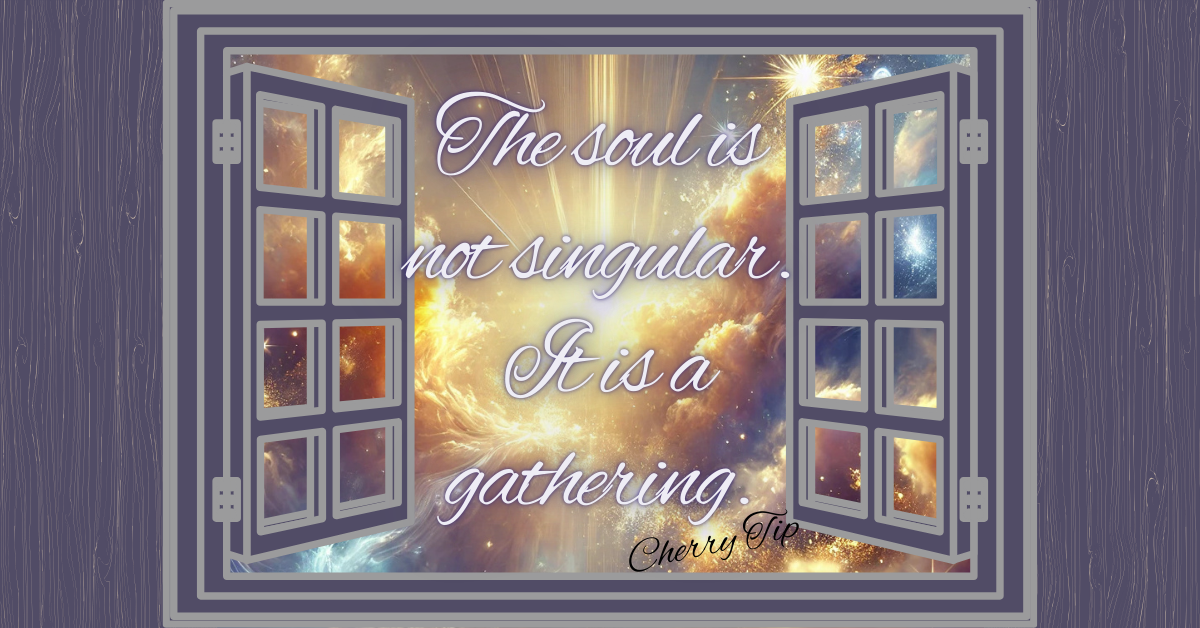
That subtle shift—we instead of I—opened a door in my mind. It made me wonder: Could this change in language be more than just a quirk? Could it reflect something deeper about the nature of consciousness, or the complexity of self?
My thoughts drifted to split-brain research—those fascinating studies where the two hemispheres of the brain are surgically separated, usually as a treatment for severe epilepsy. What researchers found was startling: the brain’s left and right hemispheres could begin to act independently of each other.
The left hemisphere, typically dominant in language and logic, might say one thing… while the right hemisphere, often linked to emotional and spatial processing, might do something entirely different. It was as if there were two minds operating in one body—two selves, neither fully aware of the other.
This research challenges our sense of a singular, unified identity. Maybe the “self” isn’t one voice, but a conversation. A chorus. A collaboration.
So, when I say we, maybe I’m not mistaken. Maybe I’m just being honest.
A Deeper Look at “We”
Among the many possibilities of who—or what—the inner we could represent, two ideas stood out to me as worth exploring: the higher self and ancestral presence.
The Higher Self
Some believe that the higher self is the wise, expansive part of our being that exists beyond ego and fear. In meditation, when the distractions quiet down and the present moment softens us, that deeper voice can emerge. It’s still us… but more complete. Not the self that’s worried about tomorrow or stuck on yesterday, but the self that sees from a higher place. A self that simply knows.
When I heard “we” in my meditation, part of me wondered—was that me… or me, aligned with something greater inside myself?
The Ancestral Presence
Then again, maybe the we is more than just me. Maybe it includes those who came before. I’ve often felt that we carry our ancestors with us—in memory, in instinct, in stories passed down or even forgotten. Some cultures believe this quite literally.
In many Indigenous traditions, such as those held by the Lakota or the Cherokee, ancestors are not gone—they walk with us. They are guides, protectors, and participants in the ongoing story of our lives. Similarly, in African diasporic spiritual practices, ancestral veneration is central. People call upon their ancestors during prayer, meditation, and ritual to draw strength, clarity, and connection. In Eastern traditions like Shinto in Japan, ancestral spirits are honored in home altars and ceremonies as part of daily life. Across the globe, the idea of “we” includes a lineage.
What if this we isn’t just poetic—what if it’s energetic?
I don’t always feel those connections in a loud or obvious way, but in the quiet, I wonder: could my inner peace be echoing voices that came long before me? Could the strength I feel in stillness be partly borrowed from those who endured before I even existed?
The “We” Within
And if I’m being honest… maybe the we is just me. The “me” that talks to herself all the time, keeps herself company, makes herself laugh.
I’ve always had a strong inner dialogue—playful, observant, sometimes even surprising. I can crack a joke that makes me genuinely laugh out loud, or debate with myself until I land on a decision that feels right. In a way, we have been in conversation for years.
So when I heard we in that quiet moment of meditation, it didn’t feel foreign. It felt familiar. Like I had simply caught myself in the act of being whole.
Balancing the Lens
Of course, the idea of multiple “selves” or voices in one mind has long intrigued neuroscientists. The split-brain research I mentioned earlier—much of it conducted in the 1960s and ’70s—sparked a wave of curiosity about how consciousness works. And while those studies did show remarkable behavior in people whose corpus callosum was severed, the scientific community today approaches the findings with more caution.
Some scientists argue that the early studies overemphasized the independence of the hemispheres and didn’t fully account for the brain’s ability to adapt and find new pathways for communication. Today, the consensus is more nuanced: yes, the hemispheres have specialized roles and can show independent behavior under certain conditions—but this doesn’t necessarily mean we have “two minds” in a literal sense.
Still, these studies opened the door to more sophisticated conversations about how distributed, flexible, and layered the mind really is. Even now, neuroscientists and philosophers continue to debate what consciousness is and where it resides. So while the we I heard in meditation may not be explained by science alone, the science itself doesn’t rule it out—it simply reminds us that there’s still so much to learn.
???? Meditation Prompt
The next time you enter a meditative state, listen closely to your inner dialogue. Pay attention to your choice of words—do you say I… or do you say we?
Let it unfold naturally without judgment. If we appears, welcome it. Observe the energy of that shift. Breathe into it. Ask inwardly, Who is speaking with me? Who is sitting here with me?
You may not receive an answer right away—but trust that something within you is listening.
? Reflection Question
When was the last time you felt a sense of we within yourself?
Was it comforting, confusing, familiar… or new?
What might your inner we be trying to tell you about the wholeness of who you are?


YouTube Fab Five: Clifton Chilli Club
Read More >